-
Please select an Industry
-
Books

If you want to sell books through a retail outlet, the retailer usually requires an ISBN (International Standard Book Number) as well as a bar code. An ISBN is a 13-digit number that identifies the book title and the publisher’s contact information.
An ISBN and a scannable bar code are separate items. Bookstores always require ISBNs, but not all retailers insist on them. Since ISBNs are more expensive than UPCs and EANs, it’s worth your while to determine your store’s requirement in advance.
Although ISBNs are internationally recognized, they must be purchased in your country of residence. If you live in the United States, you can buy them here: http://isbn.org/standards/home/index.asp
If you purchase an ISBN and need it converted into a scannable bar code, Bar Codes Talk, Inc. can do that for you. Just contact us! Of course, if your retailer accepts UPC or EAN bar codes on books, Bar Codes Talk, Inc. can supply you with everything you need!
-
Magazines
Magazines usually require special bar codes with 5-digit BIPAD numbers encoded in them though some retailers accept regular UPCs or EANs.
According to George Laurer, who invented the UPC Barcode:

"The BIPAD provides no advantage to the publishing industry over the standard UPC... There is no reason to have a BIPAD number and a number issued by either GS1 or a reseller. The bottom line is that the publisher must make the business decision as to how their magazine will be distributed."
To read the entire article by George Laurer, go to: bellsouthpwp.net/l/a/laurergj/upc/bipadplus.html
A BIPAD number represents permanent identification of the magazine, regardless of the issue. You can apply for a BIPAD at: www.bipad.com
Since BIPADs are more costly than UPCs and EANs, it is worth checking with your retailer in advance to determine their specific requirements. If they don’t require a BIPAD number, Bar Codes Talk, Inc. can supply your magazine bar codes!
-
Music

If you’re planning to sell CDs in a retail outlet, Bar Codes Talk, Inc.’s bar codes will work perfectly. If you’re an independent artist, your bar code will also enable you to register your music with SoundScan so that you can track your sales and improve your marketing.
For more information, go to: titlereg.soundscan.com/soundscantitlereg
-
Greeting Cards

Greeting cards use standard UPCs and EANs just like any other product. At one time, there were different requirements depending on whether you planned to sell boxed sets versus individual cards, but retailers now recommend putting unique bar code numbers on each variation of separately-sold card.
Bar Codes Talk, Inc. can supply what you need!
-
Shipping Containers
Looking for shipping container codes to transport your product? Bar Codes Talk, Inc. has what you need.
Shipping container bar codes make it easy for retailers to track multiple quantities of individual products. The codes are applied to the outside of shipping containers or pallets and scanned into the retailer’s inventory management system when the product arrives at, and departs from, the warehouse.

Shipping container codes are referred to by several names, including:
- GS1-14
- EAN / UCC-14
- SCC-14
- ITF-14
If you already have shipping container codes but need them converted into scannable bar codes, we can take care of that too. Just contact us!
-
-
Please select a Type
-
UPC
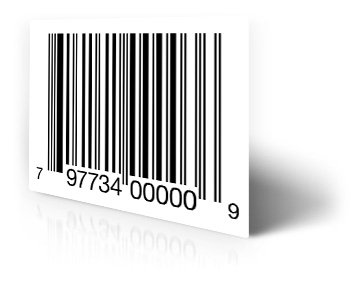
A UPC, which stands for Universal Product Code, is a 12-digit bar code used primarily in Canada and the United States. Retailers add UPCs to each item they sell in order to track their product inventory.
UPCs can be used outside of North America, although some international retailers prefer EANs (European Article Number). It’s always best to check with your retailer in advance.
-
EAN
EAN originally stood for "European Article Number," but has since been changed to "International Article Number." The term refers to the bar code used by retailers outside of North America. EANs are added to products so that retailers can track their inventory.
An EAN is essentially identical to a UPC except that an EAN contains 13 digits whereas a UPC has only 12. The extra digit makes up part of the country code and refers to where the bar code was registered. The country code has no bearing on where the product itself was manufactured. UPCs can be converted into EANs by simply adding a zero to the start of the number.
Many North American retailers accept EANs, but if you know you are going to sell your product in Canada or the United States, it's a safer option to use a UPC.
-
QR Codes
QR (Quick Response) codes were developed in Japan. Unlike standard bar codes, a QR code allows a customer to scan it with a mobile device (assuming the proper software is installed) after which details about the business or product are provided.
Typical information includes:
- Customer reviews
- Special offers
- Business location
-
-
Please select a Retailer
-
Amazon
If you plan to sell your products online with Amazon, you need to have bar codes. Certain products require specific types of codes, such as:
All other products must have a UPC (for Amazon.com and Amazon.ca) or an EAN (for Amazon.co.uk). The label must be scannable, and it needs to be printed in black ink on a white background with ¼ inch of white space along the left and right margins. If you are unsure about the capabilities of your home printer, Bar Codes Talk, Inc. can print your bar codes on labels or tags that meet Amazon’s criteria.
-