
The GSI Lawsuit 2002: What Amazon Sellers Must Know in 2025
The GSI Lawsuit 2002: What Amazon Sellers Must Know in 2025
A landmark $3.89 million settlement from the GSI lawsuit in 2002 still affects Amazon sellers today. This class action suit challenged the Uniform Code Council's (now GS1) attempt to charge renewal fees on barcode prefixes. The UCC's loss in this most important legal battle transformed how businesses could acquire and use product barcodes, including the ability to buy UPC codes from alternative sources.
The court case created a legitimate alternative path for sellers, even though Amazon prefers GS1 barcodes in certain situations. Companies like Bar Codes Talk have successfully sold over 200,000,000 barcodes that work in almost every store, including Amazon, Whole Foods, Walgreens, Target and more. Businesses that owned prefixes before 2002 can keep and sell them without renewal fees, thanks to this lawsuit. Amazon now checks UPC codes against the GS1 database for Brand Registered Sellers, yet most merchants can use reseller barcodes with guarantees successfully. Sellers should learn about this two-decade-old court decision's effect on their 2025 selling options before paying expensive recurring fees, especially when considering options to buy UPC codes for their products.
What was the GS1 lawsuit of 2002?
A major legal battle in 2002 changed the barcode industry forever. The UCC (Uniform Code Council) faced a class action lawsuit that transformed how businesses acquire and use barcodes, including the process to buy UPC codes for Amazon and other marketplaces.
Background on the UCC and GS1 transition
The barcode system started in 1973 when the Uniform Product Code Council (later known as the Uniform Code Council or UCC) was 29 years old in the United States. This organization managed the Universal Product Code (UPC) system that spread across North America. Europe created its own system through the European Article Numbering Association (later EAN International) in 1977.
Global commerce expansion made a unified system necessary. These organizations merged to form GS1 in February 2005, which created a consistent barcode standard worldwide. This radical alteration reshaped product identification management globally and impacted company prefix ownership structures.
Why the lawsuit was filed
The legal dispute started when the UCC implemented a dramatic policy change. The original system required businesses to pay a one-time membership fee between $300 and $15,000 based on company revenue, with no recurring costs. The UCC noticed many international numbering agencies charged lower original fees but needed annual renewals as it prepared to merge with EAN organizations.
The UCC began sending "renewal fee" invoices to existing members in November 2002. They included new licensing agreements with restrictive terms. More than 250,000 businesses received these notices. Many companies paid reluctantly, but others saw this as an overreach since the original terms never mentioned these fees, leading to questions about the legitimacy of company prefix ownership.
Key outcomes of the court case
The lawsuit ended with a substantial $3.89 million settlement. The court ruled that businesses with a company prefix before August 28, 2002, were entitled to:
- Perpetual membership without obligation to pay annual renewal fees
- Continued use of their company prefix
- Nullification of the new "licensing agreement"
- Simple membership benefits, including listing in the UCC directory
The settlement created legal foundations that help barcode resellers like Bar Codes Talk offer valid barcodes with a "Works for Amazon" guarantee. Pre-2002 prefixes could be kept, used, or sold without renewal fees, effectively allowing for GS1 prefix transfer to other businesses.
How the lawsuit affects barcode ownership today
The barcode marketplace we know today exists mainly because of the GSI lawsuit 2002. This landmark court decision still affects how Amazon sellers get and use their product barcodes, including options to buy UPC codes from various sources.
What 'grandfathered' prefixes mean
"Grandfathered" prefixes are the ones bought from the UCC (now GS1) before August 28, 2002. The class action settlement gave these prefixes special protected status. The court's decision let businesses that owned these prefixes get grandfathered in under the lawsuit and keep their prefixes forever. This created a new type of barcode prefix that works differently from those issued after this date, impacting company prefix ownership rights.
Legal rights of pre-2002 barcode holders
Pre-2002 prefix owners got special legal protections from the court settlement. Anyone who paid a membership fee and got a company prefix before August 28, 2002, received perpetual membership without any obligation to pay annual renewal fees. The UCC's new "licensing agreement" became void for these members. This meant that pre-2002 prefix holders could:
- Use their prefix without extra costs
- Stay listed in the UCC membership directory
- Get discount pricing on UCC events and products
- Get help through customer service
The best part was that these prefix holders could legally sell or split their barcode numbers - something that owners of post-2002 prefixes cannot do. This GS1 prefix transfer ability created a new market for legitimate reseller barcodes.
Why reseller barcodes are still valid
Reseller barcodes work because they come from these grandfathered prefixes. Companies like Bar Codes Talk and other trusted resellers sell valid UPC codes to customers worldwide using prefixes from before the 2002 cutoff date. Amazon sellers benefit greatly from this - they can buy UPC codes individually without minimum orders or yearly fees.
Bar Codes Talk offers a "Works for Amazon" guarantee, even though Amazon checks some barcodes against the GS1 database. Sellers can trust that their barcodes will work on major retail platforms without GS1 membership's ongoing costs, making it an attractive option for those looking to buy UPC codes for Amazon listings.
Amazon's barcode policy in 2025
Many new sellers get confused about Amazon's UPC barcode policies and which type of barcodes they need. Learning these requirements can help you save money and avoid headaches when you buy UPC codes for your products.
GS1 enforcement for Brand Registry sellers
Amazon prefers GS1-issued barcodes for sellers who join their Brand Registry program. This rule matters most to sellers who want to protect their branded products. Only a small number of sellers with registered trademarks need to worry about this requirement when considering Amazon brand registry options.
How Amazon checks UPCs against GS1
The system at Amazon checks certain barcodes against the GS1 database, but only for Brand Registry members. This check makes sure the prefix matches the company's name in GS1 records. Most sellers on the marketplace, especially those with generic or unbranded items, don't face such strict checking when they buy UPC codes for their listings.
Why most sellers don't need GS1 barcodes
The GSI lawsuit 2002 changed everything - now most Amazon merchants can use legitimate reseller barcodes without any problems. These grandfathered codes work well for most listings. They cost nowhere near as much as GS1 memberships which start at $250 plus yearly fees, making them an attractive option for sellers looking to buy UPC codes economically.
Bar Codes Talk's 'Works for Amazon' guarantee
Bar Codes Talk leads the market in providing legitimate barcodes and backs every purchase with a "Works for Amazon" guarantee. Their barcodes come from pre-2002 prefixes, so they work perfectly across all marketplaces. With more than 200,000,000 barcodes used on Amazon products, they offer an economical option without recurring fees for sellers wanting to buy UPC codes.
Smart barcode buying decisions for Amazon sellers
Smart barcode choices can save Amazon sellers a lot of money. The GSI lawsuit 2002 created options that many sellers don't know about when they look to buy UPC codes for their products.
Cost comparison: GS1 vs reseller barcodes
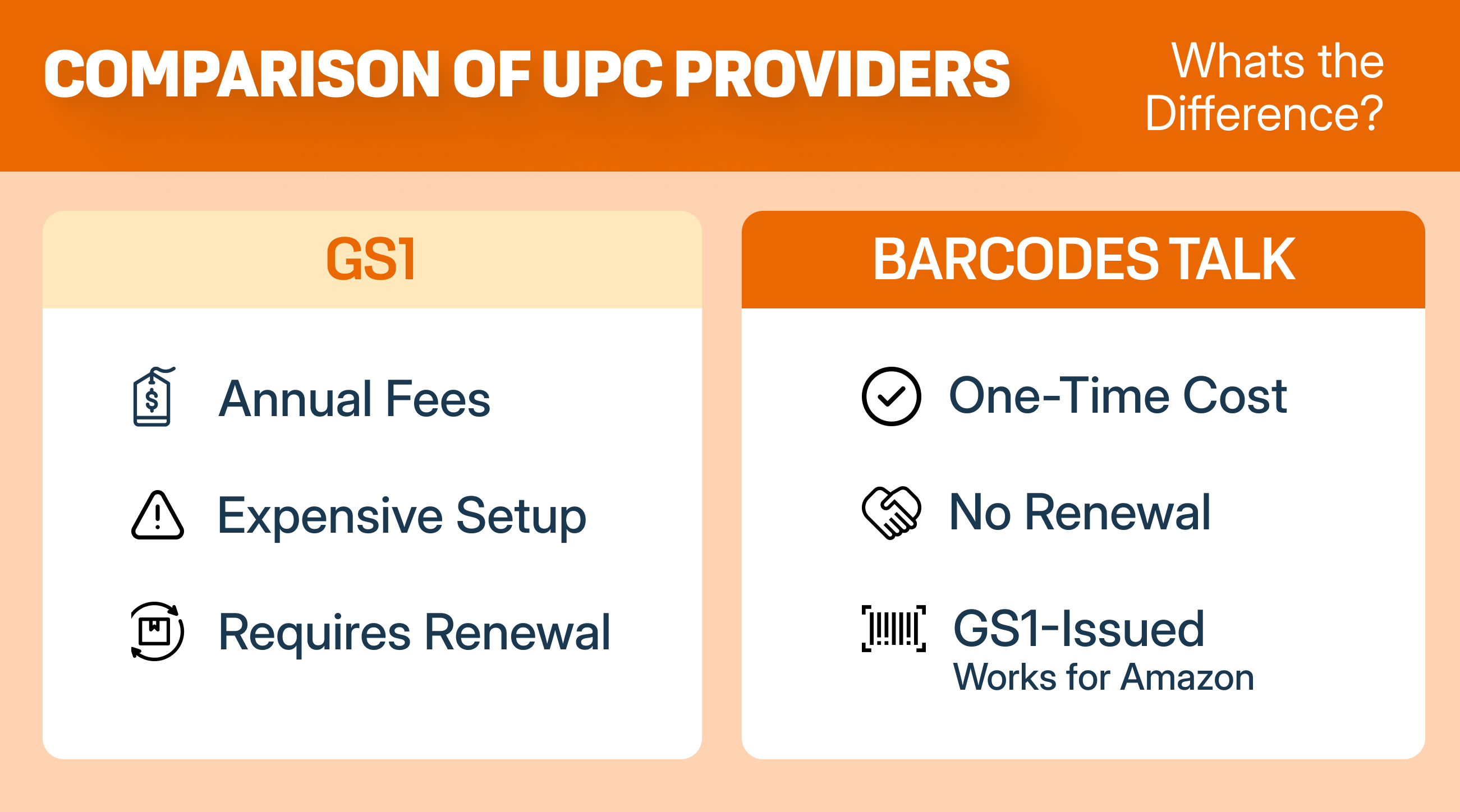
GS1 and reseller barcodes have a big price difference. GS1 asks for an original fee of $250 to $10,500 and yearly renewal fees between $50 and $2,100 based on quantity. Bar Codes Talk offers a simple one-time payment that gives you permanent ownership. GS1's single GTIN option costs $30 without renewal but still costs more per barcode than reseller prices, making reseller options attractive for those looking to buy UPC codes in bulk.
Avoiding unnecessary renewal fees
GS1's system works like a lease where you pay to keep your barcodes active. Growing businesses face mounting costs over time. Bar Codes Talk provides an Authentic Certificate of Ownership that ends future expenses. Your product identifiers stay protected whatever your catalog size, ensuring long-term company prefix ownership without additional costs.
How to verify barcode legitimacy
Reseller barcodes come from unused GS1 prefixes bought before 2002, which makes them legal under the UCC Settlement. Amazon says they check against the GS1 database, but their system really looks at whether the barcode came from a valid GS1 prefix, not its purchase source. This makes barcode ownership verification crucial for sellers who buy UPC codes from resellers.
When to choose a GS1 barcode (if ever)
You need GS1 barcodes only if you join Amazon's Brand Registry program. Most Amazon sellers can use verified GS1-issued codes from trusted resellers like Bar Codes Talk. Their "Works for Amazon" guarantee helps protect your investment when you buy UPC codes for your products.
Conclusion
The 2002 GSI lawsuit still helps Amazon sellers save money and find alternatives to costly GS1 memberships. This landmark case changed how barcode ownership works and created lasting opportunities for merchants who need product IDs without paying recurring fees.
Your specific needs matter when you buy UPC codes. Amazon sellers typically just need valid, working barcodes. They don't always need to buy directly from GS1. The settlement lets companies like Bar Codes Talk provide legitimate, grandfathered barcodes that work great on major retail platforms.
Amazon prefers GS1 barcodes for Brand Registry participants. However, this only affects a small number of sellers. The majority of sellers use reseller barcodes with guarantees successfully. Bar Codes Talk leads the pack as the top source for these legitimate identifiers. They've sold more than 200 million barcodes that work naturally on Amazon and other major retailers.
The financial aspects deserve careful thought when choosing where to buy your barcodes. GS1's model works like an ongoing lease with recurring fees. Bar Codes Talk gives you permanent ownership with just one payment. This difference becomes more important as your product line grows.
The 2002 lawsuit created a legitimate alternative that helps countless businesses today. Now that you know your barcode options better, you can make smart choices. These choices will protect your profits while meeting all marketplace requirements for years ahead.
Key Takeaways
Understanding the 2002 GSI lawsuit can save Amazon sellers thousands in unnecessary barcode fees while ensuring full marketplace compliance.
• The 2002 GSI lawsuit created "grandfathered" barcode prefixes that can be sold without renewal fees, making legitimate reseller barcodes a cost-effective alternative to expensive GS1 memberships.
• Most Amazon sellers don't need GS1 barcodes - only Brand Registry participants face stricter verification, while regular sellers can use guaranteed reseller barcodes that work across all major platforms.
• GS1 charges $250-$10,500 plus annual renewal fees, while reseller barcodes offer permanent ownership with one-time payments, potentially saving thousands over time.
• Bar Codes Talk's "Works for Amazon" guarantee provides legitimate barcodes from pre-2002 prefixes, backed by over 200 million successful implementations across major retailers.
The lawsuit settlement established that businesses owning prefixes before August 28, 2002, gained perpetual rights without renewal obligations - a legal foundation that continues to benefit sellers today through significant cost savings and simplified barcode acquisition.
FAQs
Q1. How does the 2002 GS1 lawsuit affect Amazon sellers today? The 2002 GS1 lawsuit created "grandfathered" barcode prefixes that can be sold without renewal fees. This allows Amazon sellers to purchase legitimate reseller barcodes as a cost-effective alternative to expensive GS1 memberships, potentially saving thousands in unnecessary fees when they buy UPC codes for their products.
Q2. Do all Amazon sellers need GS1 barcodes? No, most Amazon sellers don't need GS1 barcodes. Only sellers enrolled in Amazon's Brand Registry program face stricter barcode verification. Regular sellers can use guaranteed reseller barcodes that work across all major platforms without issues when they buy UPC codes for their listings.
Q3. What's the cost difference between GS1 and reseller barcodes? GS1 charges initial fees ranging from $250 to $10,500 plus annual renewal fees. In contrast, reseller barcodes like those from Bar Codes Talk offer permanent ownership with a one-time payment, potentially resulting in significant long-term savings for sellers looking to buy UPC codes.
Q4. How can I verify if a reseller barcode is legitimate? Legitimate reseller barcodes originate from unused GS1 prefixes purchased before 2002, making them legally transferable under the UCC Settlement. Reputable providers like Bar Codes Talk offer an "Authentic Certificate of Ownership" and a "Works for Amazon" guarantee to ensure legitimacy. This barcode ownership verification process is crucial when you buy UPC codes from resellers.
Q5. When should an Amazon seller consider using GS1 barcodes? GS1 barcodes are primarily necessary if you're enrolled in Amazon's Brand Registry program. For most other Amazon sellers, especially those selling generic or unbranded items, verified GS1-issued codes from reputable resellers work perfectly fine and are more cost-effective when you need to buy UPC codes for your products.