
How to Guarantee Barcode Verification: Expert Guide [2025]
Did you know many Amazon sellers waste thousands of dollars on GS1 UPC barcodes they don't need? A proper barcode check could save you from this pricey mistake and ensure your products stay authentic in today's marketplace.
Your business loses time, productivity, and money with every barcode that fails to scan. Counterfeit products have become a serious concern for buyers and businesses alike in today's market. This makes accurate barcode verification systems more vital than ever. Barcodes carry unique product details that help spot genuine items and stop fake or low-quality goods from circulating.
Product information accuracy becomes vital with items like baby formula or supplements. Your brand's reputation depends on it. Many apps now pair barcode scanning with quick online checks. This creates an efficient process that helps keep inventory accurate and compliant.
You'll find foolproof barcode verification methods that work well for thousands of Amazon sellers in this piece. These methods help you avoid unnecessary annual renewal fees and high upfront costs that often come with direct GS1 purchases. Bar Codes Talk offers verified, GS1-issued codes that over 200 million barcodes use in retailers worldwide. This ensures your verification process stays both economical and reliable.
When and Why Barcode Verification Matters
Barcode errors can get pricey for businesses. Even a small scanning error rate leads to major operational disruptions. Accurate barcode verification protects you against costly mistakes and security risks. Here's why this process matters to businesses of all types.
Need verified, GS1-issued barcodes without renewal fees? Get yours here.
https://www.barcodestalk.com/buy-barcodes
Counterfeit Risk in eCommerce and Retail
Today's digital world faces a serious threat from counterfeit products that affect both consumers and legitimate businesses. This problem goes beyond luxury items—counterfeiters target even everyday products with sophisticated methods. Research shows that barcode verification plays a vital role to prevent fake products from entering the supply chain.
Counterfeiting can happen at any point in the product lifecycle, from manufacturing to distribution. Regular barcodes provide minimal protection since anyone can duplicate them easily. Counterfeiters who copy static QR codes make fake products appear legitimate when scanned, which creates a false sense of security.
The situation becomes especially dangerous when counterfeit products hit the market before genuine ones. The genuine product's barcode might be flagged as suspicious because someone has already scanned the counterfeit version many times. This damages consumer trust and makes authentication harder.
Companies dealing with pharmaceuticals, food products, and healthcare items face more than financial loss—patient safety hangs in the balance. Bar Codes Talk provides verification certificates that help prove product authenticity and give consumers and businesses better protection against counterfeits.
Inventory Accuracy and Supply Chain Efficiency
Barcode verification optimizes inventory management throughout your supply chain. Businesses using barcode systems reach 99.9% accuracy rates—much better than manual systems that operate at 96% accuracy or lower. This is a big deal as it means that you prevent 30-40 errors per 1,000 transactions and reduce returns and customer complaints.
Inventory shrinkage costs businesses about 1.8% of inventory each year through theft, administrative errors, vendor fraud, and damaged goods. Without proper tracking and verification, these losses stay hidden until physical counts show problems.
A barcode verification system fights shrinkage by:
- Tracking every product movement
- Creating clear audit trails of who handled items and when
- Making quick, non-disruptive cycle counts possible
- Showing immediate inventory status
Companies usually cut shrinkage by 25-30% in their first year. The system also ensures that products leaving your facility are 100% accurate 100% of the time.
Compliance with Retailer and Government Standards
Big retailers like Amazon, Walmart, and Dick's Sporting Goods charge penalties for unreadable barcode labels. You need proper verification to protect your business from these financial hits. Companies in regulated industries like healthcare, automotive, or aerospace use barcode verification to avoid heavy fines for non-compliant labels.
Different retailers have different compliance requirements. This creates challenges for vendors who must follow various standards for each retail client. Barcode errors top the list of vendor compliance violations and chargeback penalties. Meeting these standards helps build better relationships with current retailers and attracts new ones.
The verification process captures valuable data about barcode quality that you can share with customers. You can dispute chargebacks and fees by proving that the barcode scanned correctly when it left your facility. Bar Codes Talk offers barcodes that meet major retailer requirements, including their "works for Amazon guarantee," helping you stay compliant without breaking the bank.
How to Verify a Barcode Online: Step-by-Step
You don't need much technical knowledge to verify barcodes online, and it's a great way to keep your business secure. The simple process helps you check if products are genuine and protects you from fakes. Here's a clear guide to make your verification reliable and quick.
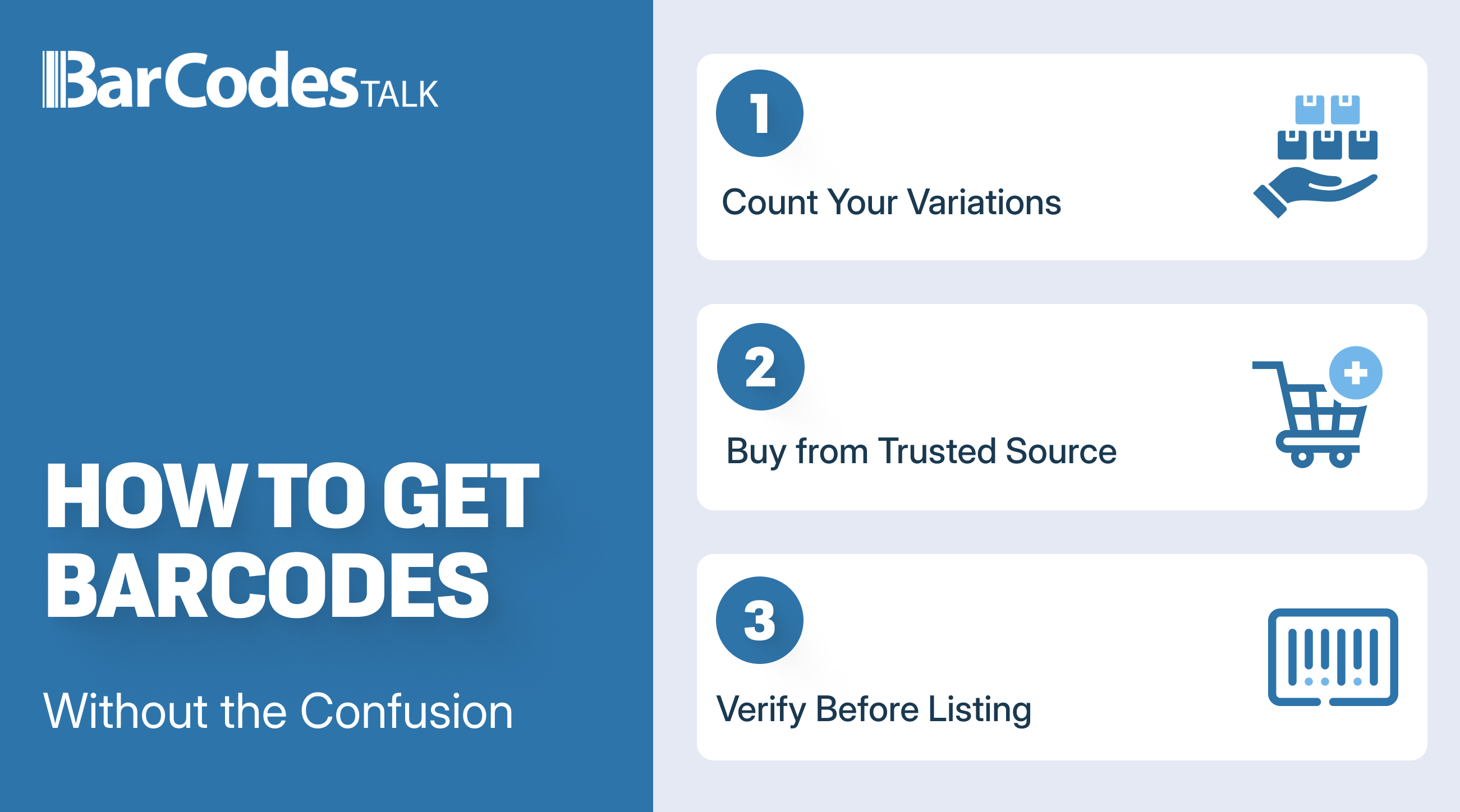
Locate and Identify the Barcode Format
Look for the barcode on your product's back or bottom. The numerical code under the barcode lines is what you'll need. These are the common formats you might see:
- UPC (Universal Product Code): A 12-digit code used mainly in North America
- EAN (European Article Number): A 13-digit code used worldwide
- ISBN (International Standard Book Number): A 13-digit identifier just for books
- GTIN (Global Trade Item Number): A 14-digit code that covers all barcode types
Each format has its own use, and knowing which type you have will help you pick the right verification tools.
Enter the Code into a Trusted Lookup Tool
Now that you know your barcode format, pick a reliable verification platform. Bar Codes Talk stands out with their "works for Amazon guarantee." You can also try these trusted platforms:
- Barcode Lookup with its millions of products worldwide
- Scanbot's barcode search tool that has details for over 500 million products
Just type the full numerical code into the search field. Make sure every digit is correct - one wrong number can give you false results.
Compare Product Info with Physical Packaging
The platform shows you product details like:
- Product name and description
- Brand and manufacturer information
- Product images
- Pricing and customer reviews (sometimes)
Check these details against your actual product. If things don't match between the online info and your product, it might be fake or there could be data errors. Real products match their digital records, especially the brand name, product type, and key features.
Use Barcode Scanner Apps for Instant Checks
Your smartphone makes verification easy. Modern phones (Android 9+ and iOS 11+) can scan barcodes right through their camera apps. You don't even need to type the codes manually.
Dedicated scanning apps offer better security features to block bad code. These apps can:
- Turn barcode data into product information right away
- Check online databases for live authentication
- Work when you're offline
- Scan multiple items at once for inventory
More businesses and shoppers use these apps, especially during busy shopping times.
This verification system will help you check products and keep your inventory accurate. Bar Codes Talk uses GS1-issued codes that millions of retailers trust worldwide, making your verification budget-friendly and reliable.
Ready to secure reliable UPC/EAN codes for your products? Buy barcodes here.
https://www.barcodestalk.com/buy-barcodes
Tools and Platforms for Digital Barcode Verification
The digital revolution has turned barcode verification from a specialized task into a widely available process for businesses of all sizes. Modern verification tools range from simple online lookups to professional-grade scanning systems.
Top Online Barcode Lookup Sites in 2025
Several powerful online platforms now lead the barcode verification world. Barcode Lookup gives users access to over 1.5 billion barcodes worldwide and offers complete product information, photos, and store pricing with each scan. EAN-search maintains a massive database with more than 1 billion different EANs, though this represents just a portion of all codes that ever spread.
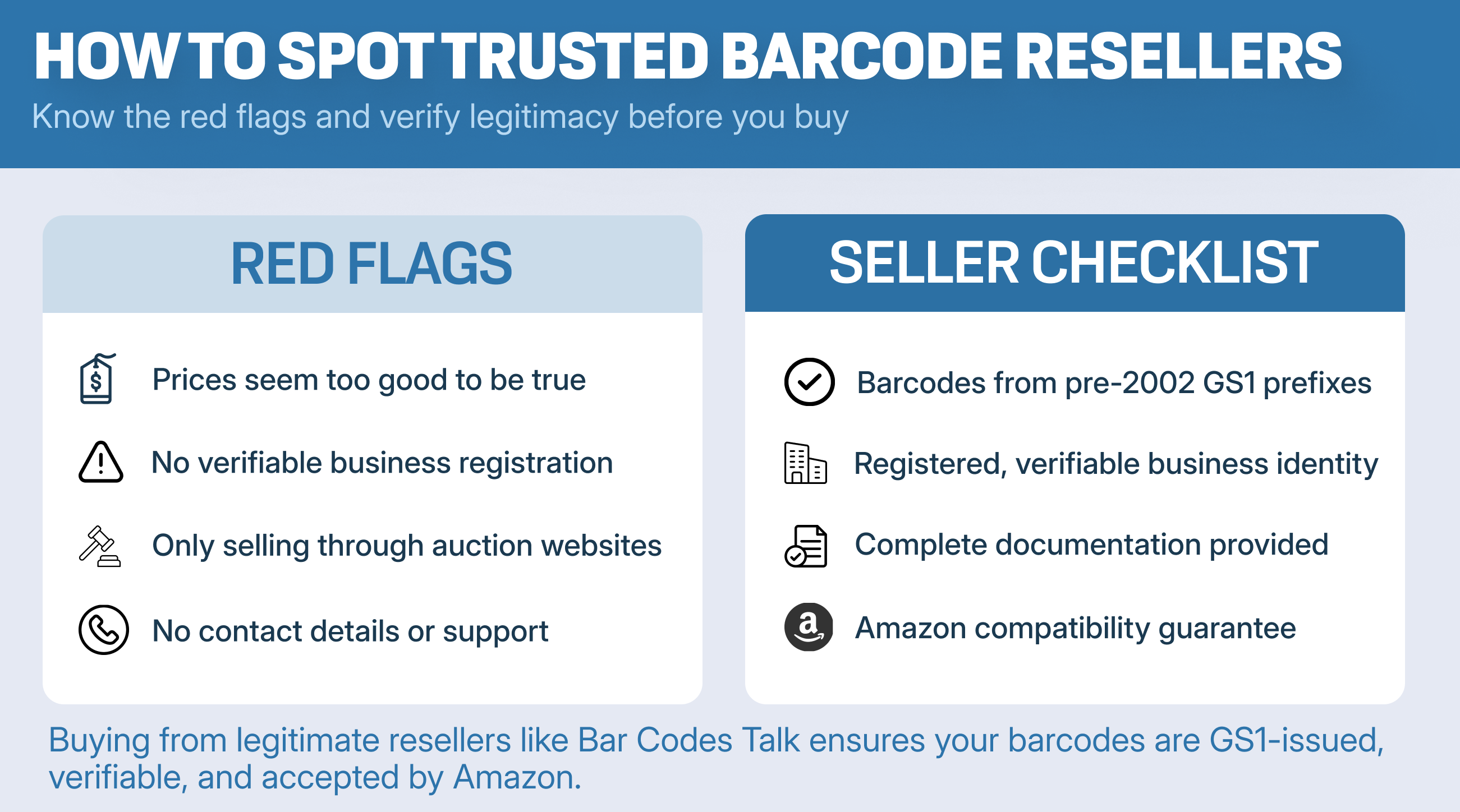
Many successful businesses make use of Bar Codes Talk for their barcode needs instead of paying for expensive GS1 registration. Their service delivers immediate barcode downloads with a Certificate of GTIN Assignment that guarantees authenticity. The service comes with a "works for Amazon guarantee," which makes it perfect for e-commerce sellers.
Mobile Apps for Real-Time Product Scanning
Mobile barcode scanning apps have grown beyond simple reading capabilities. The Scandit SDK helps enterprises add sophisticated barcode scanning features to custom mobile applications and supports various formats. QR & Barcode Scanner by Gamma Play serves consumers who need straightforward solutions with quick scanning and automatic decoding of different code formats.
Professional options like Cognex's DataMan series deliver advanced verification tools. The DataMan 475V Series performs automated high-speed verification with quality reporting. The 8072V handheld verifier grades even challenging codes quickly and reliably.
Using Bar Codes Talk Certificates for Verification
Bar Codes Talk's Certificate of GTIN Assignment stands as a trusted verification method among businesses. The company started in 1993 and provides UPC or EAN numbers at no extra charge when orders are completed. Each purchase comes with a GTIN Certificate of Authenticity that validates legitimate product registration.
Bar Codes Talk gives lifetime ownership of your codes without hidden fees or recurring costs, unlike traditional barcode registration methods that need yearly renewals. This permanent ownership ensures long-term verification capabilities with no extra expenses.
The certificate system brings transparency to your supply chain because each code can be verified instantly against the company's registry. Bar Codes Talk also guarantees that codes work with Amazon's marketplace requirements, which helps sellers avoid costly rejections due to barcode problems.
Tips for Accurate Barcode Verification Every Time
Your barcode verification success depends on technical factors that many people miss. Scanning failures can waste time and money, even from tiny flaws. Here are practical ways to get your verification process right every time.
Check Print Quality and Color Contrast
The success of barcode scanning starts with print quality. Real products have neatly printed barcodes that are well-aligned with proper spacing. These vital elements need your attention:
Black bars on white backgrounds give the best contrast and make barcodes easy to scan. Your scanners will have trouble with yellow and red colors because they can't detect them well. Black, dark blue, dark green, and dark brown work best against light backgrounds.
Inkjet printers create issues with barcodes when the X dimension (narrowest bar width) goes below .03CM due to ink splatter that distorts patterns. You should increase X dimension to .06CM with inkjet printers to fix this issue. Laser printers are a better choice as they give more consistent output.
Avoid Overlapping or Multiple Barcodes
Real products usually have one clear barcode per item. You might be looking at a tampered product if you see multiple or overlapping barcodes, especially when one covers another. Counterfeiters often use this trick to hide original or misleading codes.
Duplicate barcodes are a big problem in manufacturing and retail. While you can't stop all duplication, a good verification database helps spot unauthorized copies.
Scan Under Different Lighting and Angles
Your environment plays a big role in verification accuracy. Bad lighting, dirt, dust, smudges, and reflective surfaces can all cause scanning errors. Here's what you can do:
Move packages to areas with bright, steady lighting. Clean barcode surfaces and remove anything blocking them. Modern barcode scanning software helps with tough conditions through advanced image processing.
Technical teams often face speed and accuracy challenges in dark areas or with damaged barcodes. The scanning results change based on light levels, backgrounds, and the barcode's condition.
Cross-Verify with Multiple Databases
One check isn't always enough. Professional verifiers suggest using several tools to confirm products are real:
- Dedicated barcode scanners work better and faster than smartphone cameras, especially for multiple items
- Use different tools to check details and find problems
- Save trusted verification websites like Bar Codes Talk for quick future checks
Many modern apps now connect barcode scanning with online lookups, making verification faster. Bar Codes Talk gives you certificates to prove products are real and lets you own your codes forever—without hidden costs or subscriptions.
How to Set Up a Barcode Verification Workflow
Setting up a reliable barcode verification workflow needs smart decisions about systems, training, and documentation. A solid process will give you consistent quality across product barcodes and meet compliance requirements.
Choosing Between Manual and Automated Systems
Manual verification uses handheld scanners or visual inspection to check barcode quality. Small-scale operations with limited barcode volume work well with this approach. Automated systems offer better consistency for businesses that handle many barcodes daily, especially when multiple team members conduct testing.
Automated verification uses dedicated hardware devices that grade barcodes against international standards like ISO/IEC and GS1. These systems come with adjusted optics and lighting that deliver objective, repeatable measurements of print quality and contrast. Automated systems cost more upfront but save money by reducing manual labor and minimizing error risks.
Training Staff on Verification Procedures
Quality barcodes start with your team's knowledge of barcode production. The training should give them:
- Skills to use verification equipment
- Ability to interpret grade results
- Clear workflows—who tests, when, and how to record results
- Knowledge of when to raise problems
Equipment needs regular adjustments, at least as often as manufacturers recommend or monthly without specific guidance, to maintain reference values for color and contrast. Staff training builds confidence and gives them knowledge about software features that boost productivity.
Maintaining Logs and Reports for Audits
Test results, calibration, and maintenance reports need proper storage for at least two years. This creates an audit trail without slowing down operations. Verification reports should stay with shipment or lot records to help during audits and supplier negotiations.
Your implementation should track key performance indicators (KPIs) like read rate percentages and verification pass rates to monitor improvements. These metrics show current performance and track progress over time.
Conclusion
Barcode verification helps businesses protect their products, track inventory accurately, and meet retailer standards. This piece shows how proper verification defends against counterfeiting and streamlines supply chain operations.
Barcode errors can cost businesses thousands in chargebacks, lost productivity, and damage to their reputation. The verification methods we outlined will protect your bottom line and build customer trust. Each step plays a vital role in foolproof product authentication - from checking print quality to using multiple verification databases and training your team on proper procedures.
Bar Codes Talk leads the industry in providing legitimate GTIN EAN and UPC barcodes that come with their Certificate of GTIN Assignment and lifetime ownership model. Their "works for Amazon guarantee" ensures marketplace compatibility without the drain of yearly renewal fees. Their barcodes now power hundreds of thousands of products on global retail platforms.
Today's digital tools have made verification accessible to more people. Mobile apps, online databases, and automated systems give you flexible options that work for any business size or technical skill level. These tools help maintain product authenticity and make inventory management simpler across operations.
Your verification strategy determines how well you can protect products from counterfeiting, meet compliance standards, and maintain accurate inventory. This knowledge will help you implement verification processes that protect your business and cut unnecessary costs. The right verification system is ready for your business - take action today to secure your products for tomorrow.
Key Takeaways
Perfect barcode verification protects your business from costly chargebacks, counterfeiting risks, and inventory errors while ensuring compliance with major retailer standards.
• Verify barcodes using multiple methods: Cross-check codes through online databases, mobile apps, and visual inspection to catch counterfeits and data errors before they impact your business.
• Focus on print quality fundamentals: Ensure black bars on white backgrounds with proper contrast ratios, avoid overlapping codes, and test scanning under different lighting conditions.
• Implement systematic verification workflows: Choose between manual and automated systems based on volume, train staff on proper procedures, and maintain detailed logs for audit compliance.
• Use certified barcode providers: Bar Codes Talk offers GS1-issued codes with lifetime ownership and Amazon compatibility, eliminating recurring fees while providing authentication certificates.
• Leverage technology for efficiency: Modern smartphone apps and dedicated scanners can instantly verify millions of products, streamlining your authentication process without expensive equipment.
Businesses implementing proper barcode verification typically achieve 99.9% inventory accuracy and reduce shrinkage by 25-30% within the first year. The investment in verification systems pays for itself through prevented chargebacks, reduced manual errors, and improved supply chain efficiency.
FAQs
Q1. How can I verify the authenticity of a barcode online? To verify a barcode online, first locate and identify the barcode format on your product. Then, enter the numerical code into a trusted lookup tool like Barcode Lookup or Bar Codes Talk. Compare the retrieved product information with your physical item to ensure they match. For convenience, you can also use barcode scanner apps on your smartphone for instant verification.
Q2. What are the key factors in ensuring accurate barcode scans? To ensure accurate barcode scans, focus on print quality and color contrast. Use black bars on white backgrounds for optimal readability. Avoid overlapping or multiple barcodes on a single item. Test scans under different lighting conditions and angles. For inkjet printers, increase the X dimension to .06CM to compensate for ink splatter.
Q3. Why is barcode verification important for businesses? Barcode verification is crucial for businesses to prevent counterfeit products, maintain inventory accuracy, and ensure compliance with retailer and government standards. It helps avoid costly chargebacks, reduces shrinkage, and improves supply chain efficiency. Proper verification can lead to 99.9% inventory accuracy and typically reduces shrinkage by 25-30% within the first year of implementation.
Q4. What should be included in staff training for barcode verification? Staff training for barcode verification should cover proper use of verification equipment, interpretation of grade results, following clear workflows, and understanding when to escalate problems. It should also include knowledge about barcode production, regular re-calibration of equipment, and familiarity with software functionalities. This comprehensive training improves productivity and ensures consistent quality in barcode verification processes.
Q5. How can businesses set up an effective barcode verification workflow? To set up an effective barcode verification workflow, businesses should first choose between manual and automated systems based on their barcode volume. Then, implement thorough staff training on verification procedures. Maintain detailed logs and reports for audits, keeping records for at least two years. Establish key performance indicators like read rate percentages and verification pass rates to monitor improvements over time. Consider using certified barcode providers like Bar Codes Talk for added authenticity and compliance.