
Why GS1 Database Mismatches Happen: Expert Guide to Barcode Verification [2025]
Amazon sellers throw away thousands of dollars on GS1 Data Hub barcodes they don't need. You might think Amazon's verification process requires direct GS1 barcode purchases, but that's not true. This misunderstanding results in extra costs and renewal fees that eat into your profits.
Your valuable selling time can disappear when Amazon flags a GS1 mismatch. Sellers face listing removals or "invalid GTIN" errors that stop sales completely. Database mismatch UPC issues frustrate thousands of sellers each day. UPC barcodes from third-party resellers cause most problems. The surprising part? Even GS1-issued codes can face rejection on Amazon's platform. Most Amazon sellers use third-party GS1-issued barcodes successfully and save money on yearly renewal fees and upfront costs. Amazon's 2024 sales will reach approximately $447 billion. Your product listings need protection from barcode verification problems to grab your share of this huge marketplace.
This article will show you the reasons behind GS1 Data Hub mismatches. You'll learn to direct Amazon's verification system and see why different barcode options might work better for your long-term success. We'll also explore how to maintain good Amazon account health through proper barcode management.
How GS1 Barcode Verification Works on Amazon
Amazon's GTIN validation process explained
Amazon needs unique Global Trade Item Numbers (GTINs) for products in more than 25 categories. These identifiers act as your product's digital fingerprint in Amazon's big catalog.
Your listing creation triggers the verification process. Amazon checks your UPC/EAN automatically against the GS1 database. Amazon states: “We verify the authenticity of product UPCs by checking the GS1 database. UPCs that do not match the information provided by GS1 will be considered invalid.”
The validation checks:
- GTIN registration in GS1's database
- Brand name match with GS1's records
- Your authorization to sell that brand
Need guaranteed-working UPCs without GS1 renewal fees? https://www.barcodestalk.com/buy-barcodes
Why Amazon errors still occur with valid barcodes
Valid GS1 barcodes don't guarantee error-free listings. Verification delays are common — GTINs may take up to 72 hours to sync across Amazon systems.
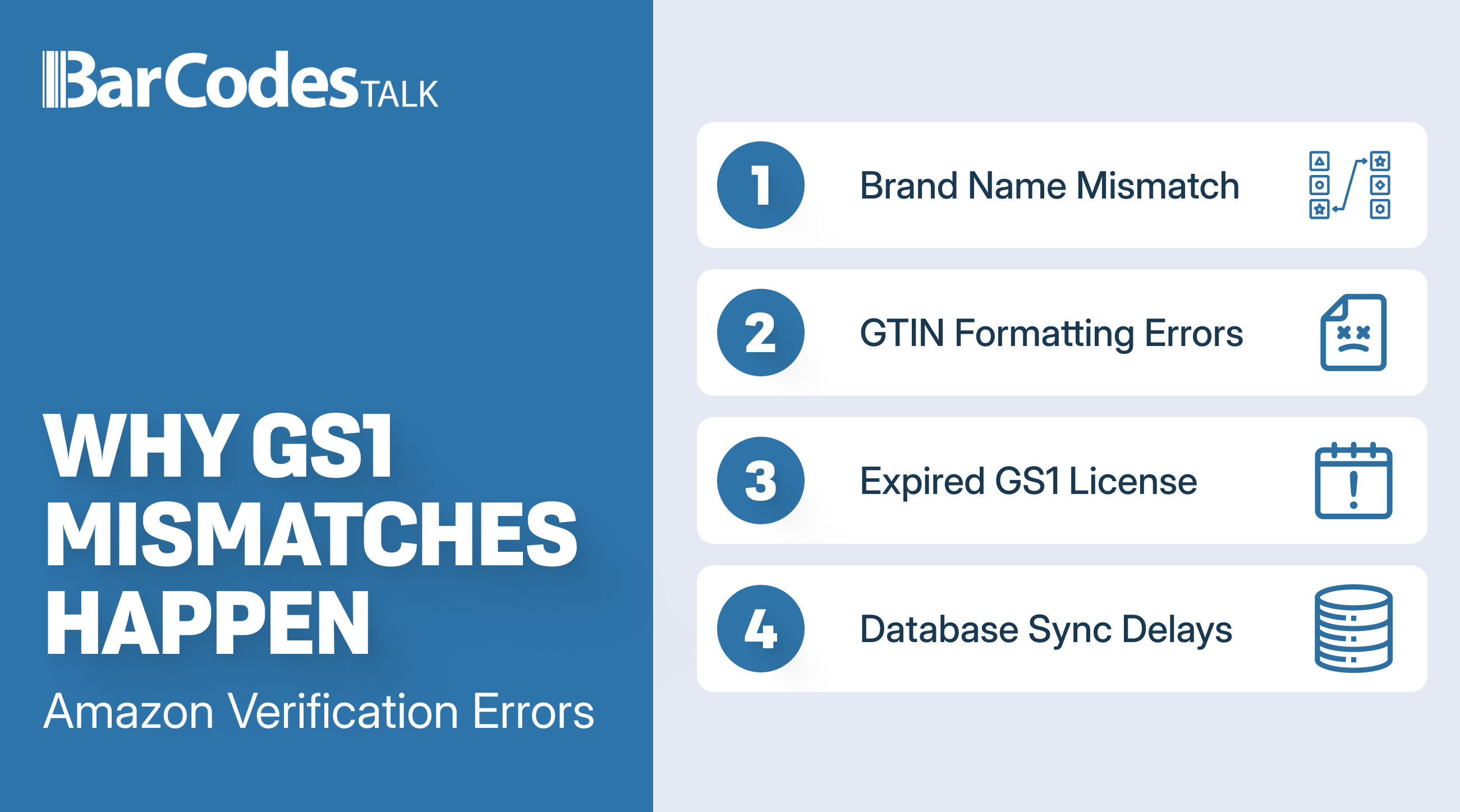
- Brand name inconsistency — Amazon flags over 400,000 listings daily due to mismatched brand names.
- Incorrect GTIN formatting (wrong digit count, invalid check digit, non-numeric characters).
- Database synchronization delays between GS1 and Amazon.
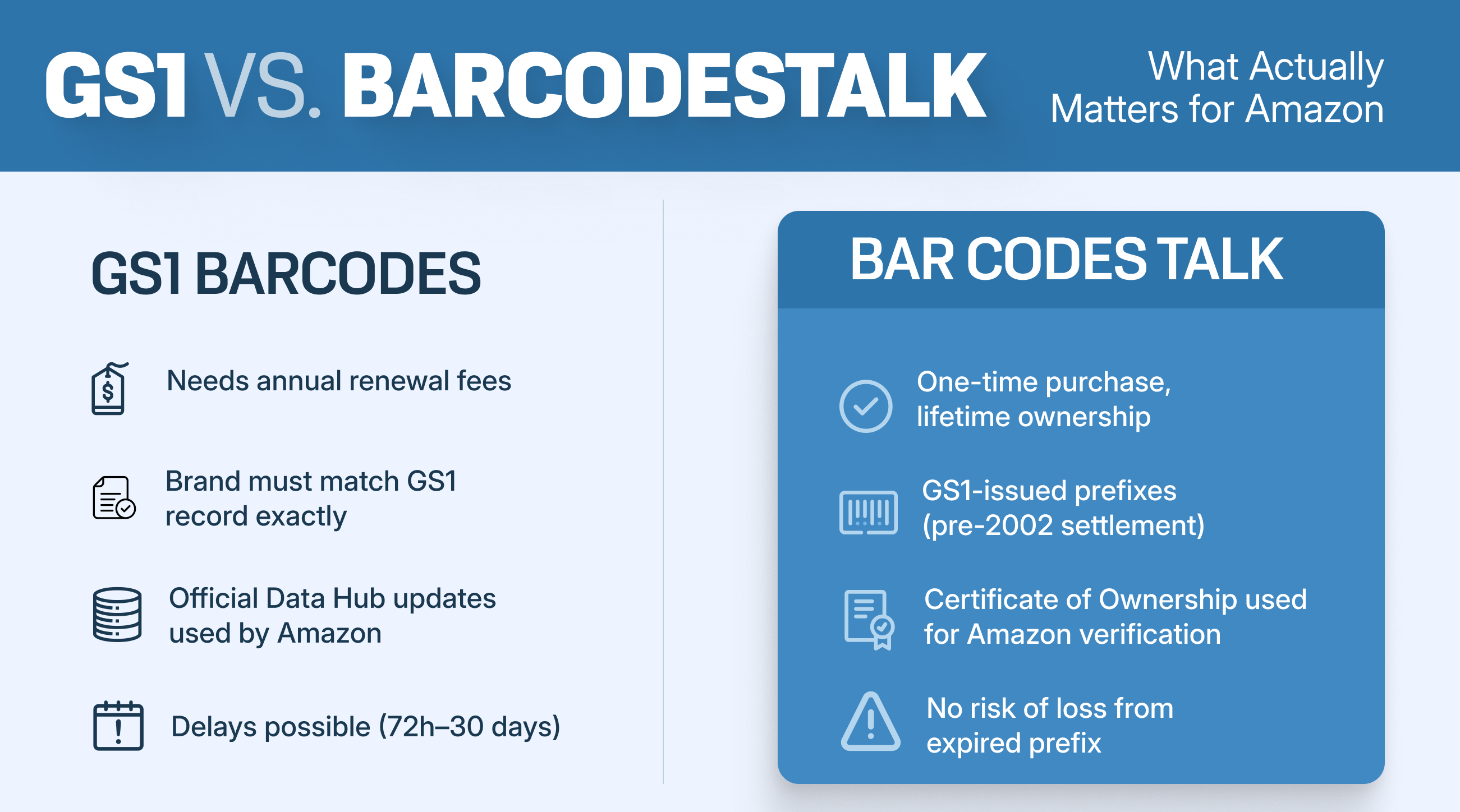
If your GS1 membership expires, Amazon may invalidate your codes due to yearly renewals costing $250 to $10,500.
Avoid GS1 expiration issues entirely: https://www.barcodestalk.com/buy-barcodes
GS1 Data Hub sync issues
GS1 Data Hub often delays updates. Many sellers report new GTINs taking days or weeks to sync. GS1 maintains records for over one million GS1 member companies.
Because of this, many sellers find budget-friendly alternatives in properly documented reseller barcodes.
Fixing GS1 Mismatches
How to check your barcode in GS1 Data Hub
Use the Verified by GS1 lookup tool to identify inconsistencies.
Using GS1 certificates for Amazon verification
Download your GS1 certificate and submit it when Amazon audits your GTIN ownership.
Correcting GS1 product records
- Draft → delete
- PreMarket → retract
- In Use → archive
- Archived → reactivate if needed
Correcting brand mismatches
Amazon requires exact character-for-character brand matching. Learn more about common causes at: exact character matching
Why Reseller Barcodes Are a Valid Alternative
Legal background: the 2002 lawsuit
The reseller market exists because of a major legal ruling. On December 11, 2003, the UCC (now GS1) lost a class-action lawsuit confirming pre-2002 prefixes are permanently owned and transferable.
How reseller barcodes pass Amazon verification
With proper documentation, reseller barcodes work because:
- They originate from GS1-issued prefixes
- Ownership transfer is legally documented
- Verification chains match GS1 standards
Get GS1-issued reseller barcodes with no renewal fees: https://www.barcodestalk.com/buy-barcodes
Best Practices to Prevent Future Issues
- Ensure consistent brand names everywhere
- Use correct GTIN formats (e.g., GTIN-12 (UPC))
- Keep GS1 certificates ready for audits
- Allow 5–7 days for GS1/Amazon sync
Conclusion
GS1 mismatches can occur from brand name issues, formatting errors, expired licenses, or sync delays. Reseller barcodes remain a legal, cost-effective option when properly documented.
About the Author
Brandon Gordon is the CEO and Founder of Bar Codes Talk, a trusted industry leader supplying GS1-issued barcodes worldwide.