GS1 vs Reseller Barcodes: Hidden Risks and Smart Alternatives (2025)
Did you know that Amazon checks UPC codes against the GS1 database, but only for Brand Registered Sellers? Many sellers get confused by this unexpected requirement while trying to list products on the platform.
The world of GS1 barcode requirements on Amazon can be tricky. GS1 has been the organization behind barcodes for almost 50 years. Yet sellers are often surprised to find their barcode options extend beyond this single source. The choice between buying a barcode outright and renting one through yearly fees makes a big difference. Companies like Bar Codes Talk have sold over 200,000,000 barcodes that work in almost every store, including Amazon, Whole Foods, Walgreens, Target and more.
Amazon strictly enforces their UPC Policy for sellers in their Brand Program. Sellers in the Brand Registry must have a barcode prefix directly from GS1 to list their products. But this rule doesn't affect all Amazon sellers, despite common misconceptions. You can avoid unnecessary costs and future problems by knowing exactly what type of barcodes you need and why.
This piece will guide you through the complex world of Amazon barcodes. You'll learn the truth about GS1 versus reseller options and make smart choices to protect your business now and later.
Understanding Barcodes and GS1: The Basics for Amazon Sellers
What is a GTIN, UPC, and EAN?
GTIN (Global Trade Item Number) is the umbrella term that includes all barcode formats used worldwide. These codes serve as your product’s digital fingerprints.
- UPC (Universal Product Code) — 12 digits, used in North America.
- EAN — 13 digits, used internationally.
- ISBN — 13-digit codes for books.
- GTIN-8 — Used for smaller items.
How Amazon Uses UPC Barcodes and GS1 Numbers
Amazon uses both manufacturer barcodes and Amazon-specific identifiers:
- Manufacturer barcodes: UPC, EAN, JAN, ISBN
- Amazon barcodes:
- FNSKU — identifies product + seller
- ASIN — permanent catalog ID
Why Barcodes and GS1 Company Prefixes Matter
Barcodes help with:
- Inventory management
- Preventing duplicate listings
- Visibility and search rankings
- Supply-chain tracking
- Customer service and issue resolution
Not all sellers need GS1 barcodes — alternatives exist depending on business goals.
GS1 Barcodes: What You’re Really Paying For
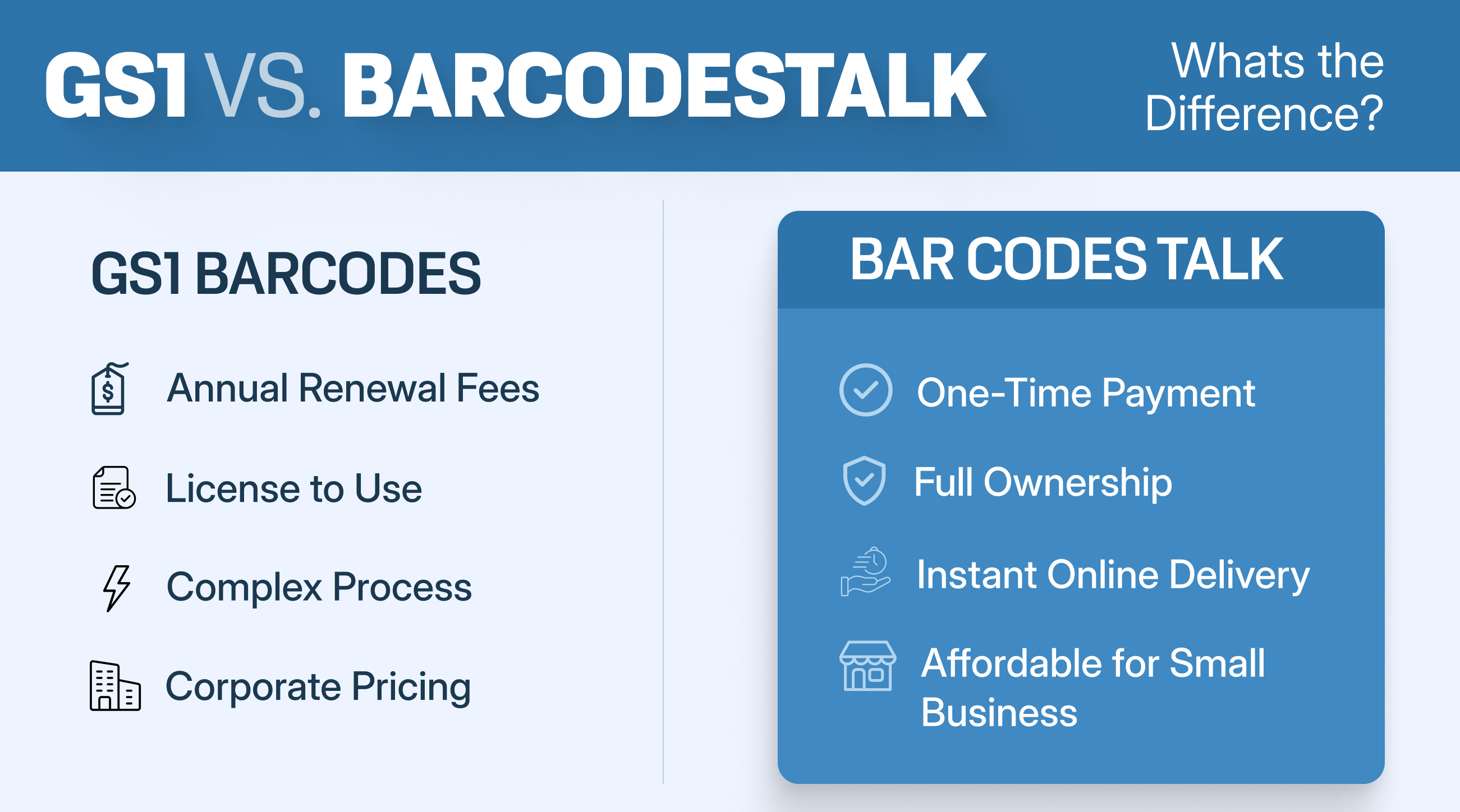
GS1 uses a recurring annual fee model — essentially a rental system — rather than selling barcodes outright.
GS1 Fee Structure
The GS1 system involves:
- A first-year fee ranging based on prefix size
- Annual renewal fees
These fees can add up quickly. See GS1's pricing: first-year fee ranging from $250–$10,500
The Myth of Universal Acceptance
Many believe GS1 barcodes are required everywhere — they are not. Even Amazon only enforces GS1 for Brand Registry sellers.
Learn more at: GS1 system
Reseller Barcodes: Legal, Legit, and Cost-Effective
The 2002 UCC / GS1 Lawsuit
The reseller barcode market exists because of a major legal ruling: $3.89 million settlement.
After this case, the UCC (which rebranded as GS1 in 2005) could not revoke or encumber prefixes purchased before August 28, 2002.
See historical context: History of the UPC Barcode
How Resellers Get Their Barcodes
Resellers purchase fully paid, pre-2002 prefixes, legally owned forever. These contain large blocks of unused UPC/EAN numbers.
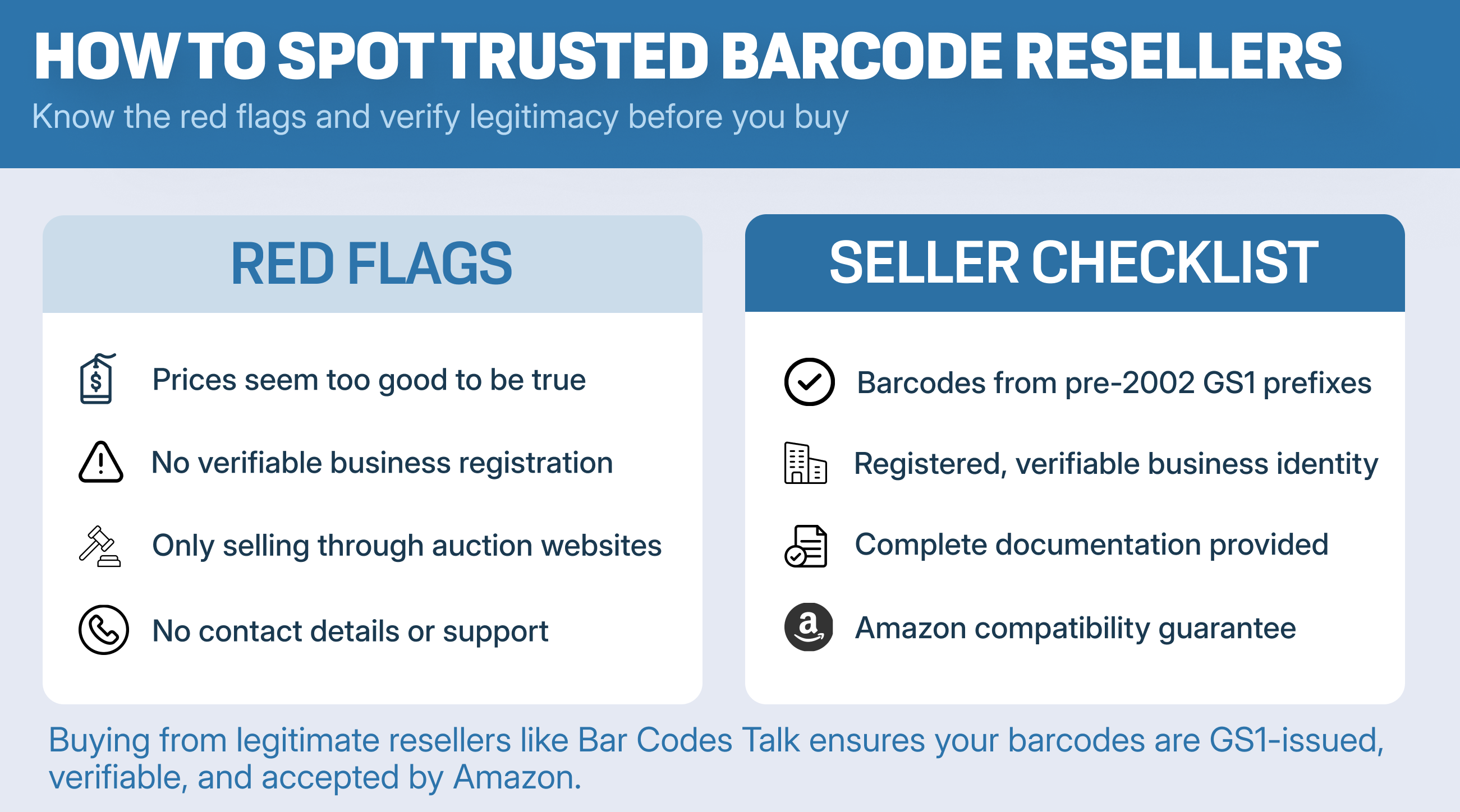
Are Reseller Barcodes Safe for Amazon?
Yes — for most sellers not in Brand Registry.
Amazon’s Barcode Policy
GS1 enforcement applies only to Brand Registry. Standard sellers face no GS1 database check.
Cost Comparison
GS1 fees can accumulate rapidly: first-year fees range from $250–$10,500
Reseller barcodes are a one-time purchase with no renewals.
Conclusion
Most Amazon sellers do not need GS1 barcodes unless they join Brand Registry. Reseller barcodes are legal, permanent, cost-effective alternatives backed by court rulings and decades of use.
About the Author
Brandon Gordon is the CEO and Founder of Bar Codes Talk, providing GS1-issued barcodes to over 200,000 businesses worldwide.