How to Avoid Amazon Errors Because of Barcode Issues
 Amazon handles more than 600 million products, and their barcode requirements system shows some flaws. Sellers usually find this out the hard way after their listings vanish or get flagged for barcode violations. These amazon errors can significantly impact your business, affecting both your listing visibility and overall amazon account health.
Your listings might face rejection even with valid barcodes. Many rejections happen to legitimate GS1-issued barcodes because of timing or data mismatches, not invalid codes. The system needs up to 72 hours to recognize new barcode registrations. This delay leaves sellers confused and frustrated by unexpected listing suppression notices.
The marketplace's reputation includes shutting down listings without notifying sellers. Your product detail page will face suppression if Amazon spots a mismatch between your UPC and brand information. The verification system has blocked new product listings since 2016 if it detects an existing GTIN that belongs to another company, leading to product matching errors.
The situation becomes more complex as Amazon's AI scans beyond your marketplace listings. The system now checks your direct-to-consumer websites and other off-Amazon content for policy violations. A detail deemed non-compliant anywhere can trigger warnings or listing suppressions, even if it's not on your Amazon listing.
This piece explains Amazon's barcode system, potential listing flag triggers, and solutions to these problems. You'll get practical strategies to meet Amazon's seller barcode requirements correctly from the start. This approach helps you avoid rejected listings, lost sales, and maintain optimal listing visibility.
How the Amazon Barcode System Works
The moment you create a product listing on Amazon, their barcode verification system starts working in the background. You'll save yourself from frustrating rejections and listing suspensions by learning how this system works and ensuring barcode compliance.
What Amazon checks during listing creation
Amazon's algorithm runs several significant checks when you submit a new listing with a barcode. The system makes sure your barcode shows up in recognized databases like the GEPIR database and verifies that product information matches existing records. It also gets into whether the GTIN (Global Trade Item Number) meets amazon barcode size requirements. The system looks for any signs of barcode reuse or duplication, especially when you have the same code appearing in different seller accounts.
How barcode data is matched with brand info
The matching process goes deep into details. Amazon compares your barcode against product identification information from multiple platforms. Your brand name needs to be similar across all systems. Small differences like "Company LLC" versus just "Company" can raise red flags. The system focuses on:
- Brand name consistency
- Product category alignment
- Manufacturing information
- Product dimensions and specifications
Your amazon seller barcode requirements include keeping this consistency in all your sales channels, not just Amazon. Enrolling in the amazon brand registry can help maintain this consistency and prevent brand-related issues.
Why timing delays cause false rejections
The biggest problem with Amazon's barcode system comes from timing delays. Legitimate barcodes you buy from trusted sources like Bar Codes Talk need time to spread through global databases. This update can take 48-72 hours, and Amazon might flag your listing incorrectly during this time. Your code could be valid but Amazon's system might not recognize it yet, leading to an amazon error.
These timing issues often affect sellers who meet amazon fba barcode requirements perfectly but create listings right after buying new barcodes. The system needs time to update, so waiting a bit after getting new barcodes helps you avoid unnecessary hassles and rejection notices.
Top Reasons Your Barcode Gets Flagged
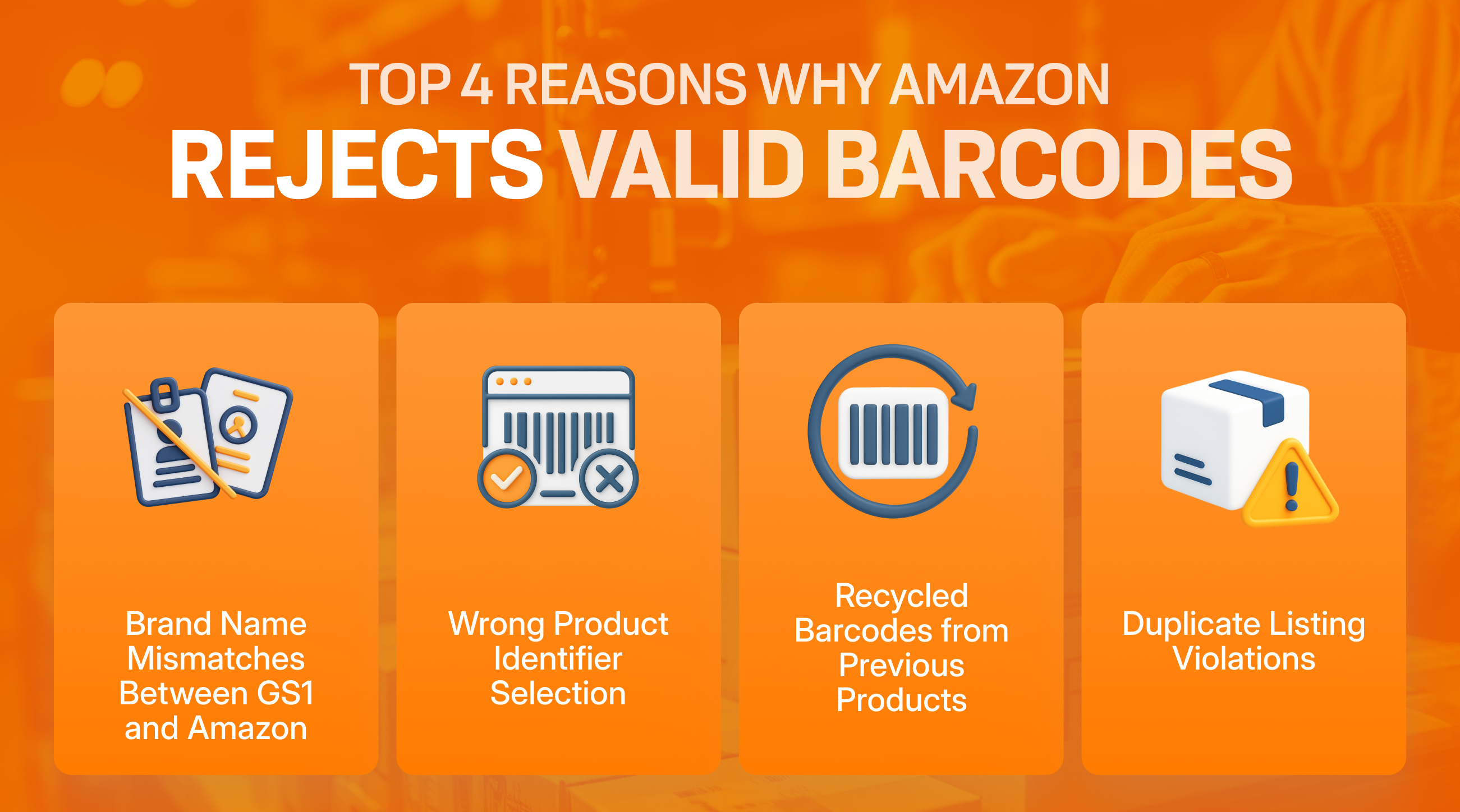
Amazon flags barcode listings daily, and understanding why helps you avoid getting your listings suppressed and pricey. The company flags more than 400,000 listings each day that have UPC or EAN codes mismatched with their database's brand names. Let's get into what causes these rejections and potential duplicate listing violations.
Brand name mismatch between listing and barcode
Listings get suppressed most commonly when your Amazon brand name doesn't match exactly with the barcode database records. Small differences like "Brand LLC" versus just "Brand" can trigger flags. Companies face this problem after acquisitions or when parent/subsidiary relationships shift. Amazon's system needs these elements to arrange perfectly to keep its catalog accurate and maintain proper product identification.
Recycled or reused barcodes from other products
Amazon's catalog rules don't allow reusing barcodes from discontinued products. Each product needs its own unique identifier. You need different barcodes when you launch new products, especially for multipacks or bundles. Amazon suppresses listings or marks them as duplicates if you skip this step. Using recycled barcodes can lead to serious issues with your account. You can get unique barcodes from reliable sources like Bar Codes Talk, which offers codes with a "works for Amazon guarantee."
Wrong barcode type selected (UPC vs EAN vs GTIN)
Picking the wrong identifier type leads to instant rejection. Product identifier selection is crucial for successful listings. To name just one example, see U.S. companies with UPC-12 (GTIN12) - they should pick "UPC" from the product ID dropdown menu, not "GTIN." This small mistake causes frustrating failures that slow down product launches and can lead to inventory management issues.
Duplicate listings using different barcodes
Amazon's policies prohibit creating new listings for products already in their catalog. Sellers often make this mistake by assigning new barcodes to items that already have ASINs. The company strictly enforces its "one product, one catalog page" rule. Using different barcodes to bypass this rule can get your account suspended. The system sees these attempts as catalog manipulation and may restrict your seller privileges.
How to Fix a Rejected Barcode Listing
A barcode rejection doesn't have to slow you down. You can get your listings back online fast by following these Amazon barcode requirements and addressing any gs1 barcode issues.
Verify your barcode in the GS1 database
Start by checking your barcode details in the GS1 database verified by GS1 service. This free tool confirms your ownership details and spots potential mismatches. The GS1 database updates daily, but Amazon's system needs up to 72 hours to recognize new barcodes. Ensure your gs1 company prefix is correctly associated with your product.
Submit proof of ownership to Amazon
Your barcode might be legitimate but still get rejected. The solution is to open a case with Amazon Seller Support. Send them your GS1 certificate, product photos with the barcode on packaging, and brand authorization documents. Amazon usually reviews these submissions in 1-3 business days.
Apply for a GTIN exemption if eligible
Private-label goods, handmade items, or products without manufacturer barcodes might qualify for exemption. You'll need 2-9 real product photos that show all sides without barcodes. Amazon won't approve exemptions for brands they know have GS1 barcodes.
Use the Category Listing Report to update UPCs
The quickest way to fix UPC problems across multiple listings is to download this report from Inventory Reports in Amazon Seller Central. This beats fixing each rejected listing one by one and helps streamline your inventory management.
Merge listings to retain reviews and history
Sometimes you'll need to create a new ASIN with a valid UPC. You can still keep your existing reviews through Amazon's merger process. Set up the new listing with correct barcode information from trusted sources like Bar Codes Talk. Then ask Amazon to merge the old ASIN into the new one. Make sure all product details match between listings to boost your approval chances.
Prevent Barcode Issues Before They Happen
Fixing barcode problems is nowhere near as easy as preventing them. These preventative strategies will save you time and reduce stress while maintaining your amazon account health.
Buy from verified sources like Bar Codes Talk
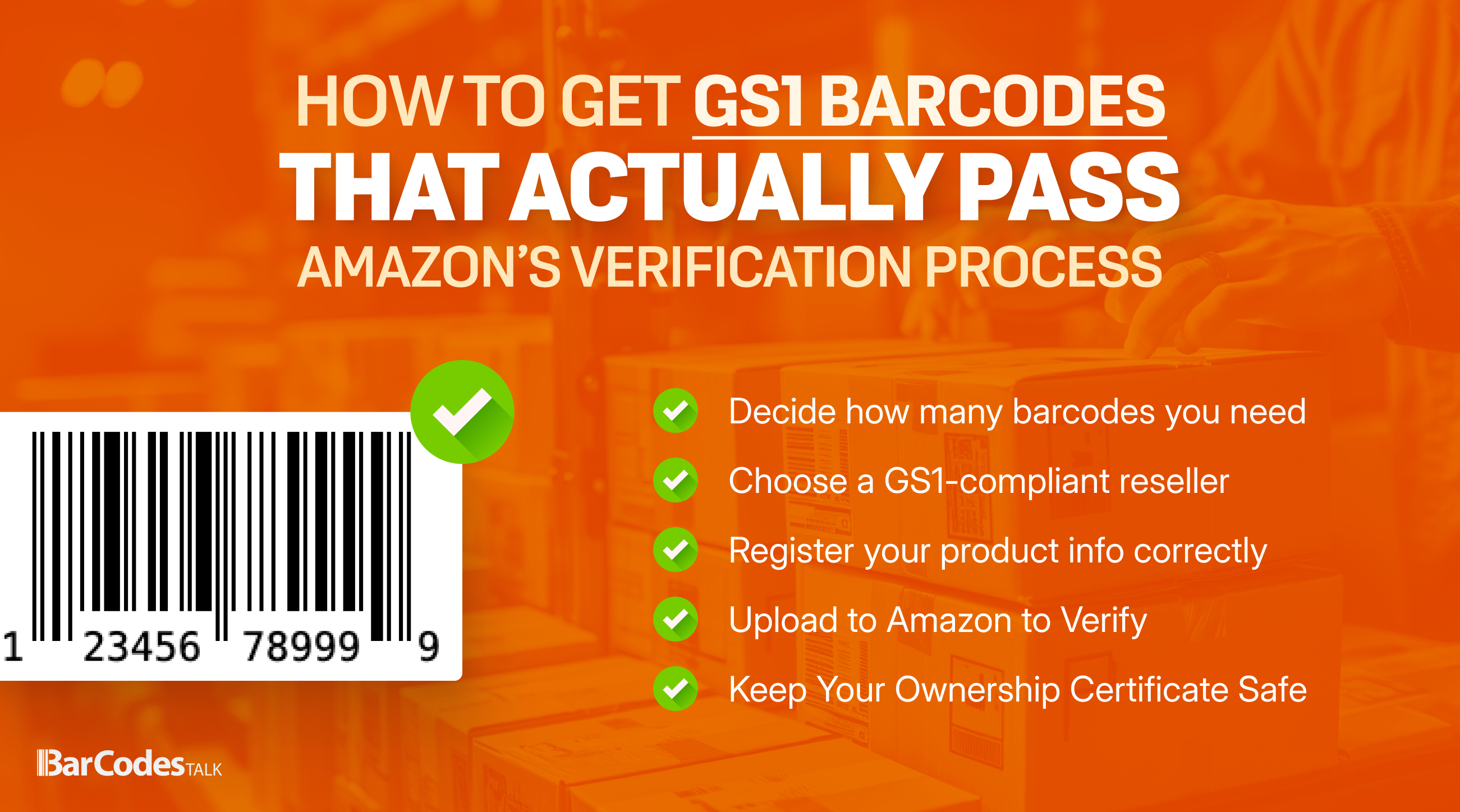
Getting legitimate barcodes from Bar Codes Talk gives you unique GTINs that work naturally with Amazon's verification system. Their barcodes include a "Works for Amazon Guarantee" and ownership certificates that prove legitimacy when questioned. These barcodes come from legitimate prefix assignments, unlike cheaper options that might not meet barcode standards.
Match your brand name exactly across platforms
Your GS1 registration and Amazon listing must match perfectly to avoid automatic rejections. The brand name should stay similar on your GS1 registration, Amazon listings, and other sales platforms. Consistency is key to preventing product matching errors.
Avoid reusing GTINs for new products
GTIN reuse stopped in January 2019 for all industry sectors. A GTIN assigned to a product stays with it forever—even after you stop selling it. New variations or multipacks need their own unique barcode to ensure proper product identification.
Understand Amazon FBA barcode requirements
Amazon barcodes need black ink printed on white, non-reflective labels with removable adhesive. Label dimensions should be between 1x2 inches and 2x3 inches with enough white space around the code. Adhering to these barcode standards is crucial for FBA sellers.
Keep your barcode documentation organized
Store your GS1 certificates, purchase receipts and ownership documents where you can find them quickly. Quick access to this proof can resolve verification problems in hours rather than days, helping you maintain listing visibility.
Conclusion
Amazon's complex barcode verification system might seem daunting at first. You can save countless hours of frustration and avoid potential revenue loss by understanding common pitfalls and taking preventive steps. Your success depends on getting legitimate barcodes from trusted sources like Bar Codes Talk that offer the "Works for Amazon Guarantee" to protect your listings and prevent amazon errors.
The right timing makes a big difference in barcode acceptance. New barcodes need 48-72 hours to process before you create listings, which helps avoid rejection issues. Your brand name must stay consistent across all platforms and documentation to pass Amazon's sophisticated verification systems.
Product listings take time and resources to build properly. You need to protect them from unnecessary suppression. This piece gives you the tools to handle Amazon's barcode requirements with confidence and keep your products selling smoothly. Skip the headache of fixing rejected listings and focus on what truly matters - building your business and boosting sales on the world's largest online marketplace.
Key Takeaways
Amazon's barcode verification system processes over 600 million products and flags 400,000+ listings daily, making proper barcode management crucial for seller success.
• Purchase legitimate barcodes from verified sources like Bar Codes Talk with "Works for Amazon Guarantee" to avoid rejection issues • Wait 48-72 hours after buying new barcodes before creating listings to allow database synchronization across platforms • Ensure exact brand name consistency between GS1 registration, Amazon listings, and all sales channels—even minor variations trigger flags • Never reuse GTINs for different products; each unique item requires its own permanent barcode identifier • Keep barcode documentation organized and submit proof of ownership immediately when facing verification challenges
The most effective approach is prevention rather than remediation. By following these guidelines, you'll avoid the frustration of suppressed listings and maintain uninterrupted sales on Amazon's marketplace.
FAQs
Q1. How can I sell products on Amazon without a barcode? If you're selling your own private label brand, a generic unbranded product, or a handmade item, you can apply for a GTIN exemption from Amazon. This exemption allows you to list your products without traditional barcodes.
Q2. What are Amazon's barcode requirements for sellers? Amazon requires barcodes to be printed in black ink on white, non-reflective labels with removable adhesive. The dimensions should be between 1x2 inches and 2x3 inches, with sufficient white space around the code. These barcode standards are crucial for maintaining listing visibility.
Q3. How long should I wait after purchasing a barcode before creating an Amazon listing? It's recommended to wait 48-72 hours after purchasing new barcodes before creating listings on Amazon. This allows time for the barcode information to propagate through global databases and be recognized by Amazon's system, reducing the risk of amazon errors.
Q4. Can I reuse barcodes for different products on Amazon? No, you should never reuse GTINs (Global Trade Item Numbers) for different products on Amazon. Each unique product requires its own permanent barcode identifier, even for variations or multipacks of existing items. Using recycled barcodes can lead to serious listing issues.
Q5. How can I prevent my Amazon listing from being flagged for barcode issues? To prevent barcode issues, purchase legitimate barcodes from verified sources like Bar Codes Talk, ensure exact brand name consistency across all platforms, avoid reusing GTINs, and keep your barcode documentation organized. Additionally, understand and follow Amazon's specific barcode requirements for sellers. Proper product identifier selection and adherence to barcode compliance standards will help maintain your listing visibility and overall amazon account health.
About the Author
Brandon Gordon is the CEO and Founder of Bar Codes Talk, a trusted industry leader providing GS1-issued barcodes to more than 200,000 businesses worldwide.
Since founding the company in 2009, Brandon has helped eCommerce sellers and manufacturers navigate barcode compliance with honesty, transparency, and efficiency.
Under his leadership, Bar Codes Talk has become one of the most reliable sources for legitimate GS1 barcodes—helping Amazon sellers avoid costly mistakes and get their products listed quickly.